Confectionery Ingredients Supplier
What you are reading in this article ...
Direct Industrial Supply of Confectionery Ingredients from IranKam Kaya B2B Supply SnapshotWho This Wholesale Confectionery Supply Page Is ForKam Kaya as an Ingredient-Focused Confectionery Products Supplier in IranProduct Scope and Industrial Use CasesWhy International Buyers Source Confectionery Ingredients from IranEvaluating Iran Confectionery Companies for Direct B2B SupplyDirect Supply Advantages Over Intermediary SourcingWholesale and Export Supply ProcessInformation Buyers Should Provide Before Requesting a QuoteQuality Control, Specifications, and DocumentationManufacturing Capability and B2B Production SupportConsistency for Repeat and Bulk OrdersPackaging, Specifications, and Custom B2B RequirementsExport Communication and Shipment CoordinationWhy Choose Kam Kaya as Your Iranian Confectionery Ingredients SupplierRequest a Wholesale Quote from Kam KayaFAQ for International BuyersIs Kam Kaya a confectionery ingredients supplier or a trading company?Can international buyers order wholesale confectionery products from Iran?What information is needed to request a quotation?What is the minimum order quantity for wholesale buyers?Can Kam Kaya provide product specifications or documentation?Does Kam Kaya support long-term B2B supply cooperation?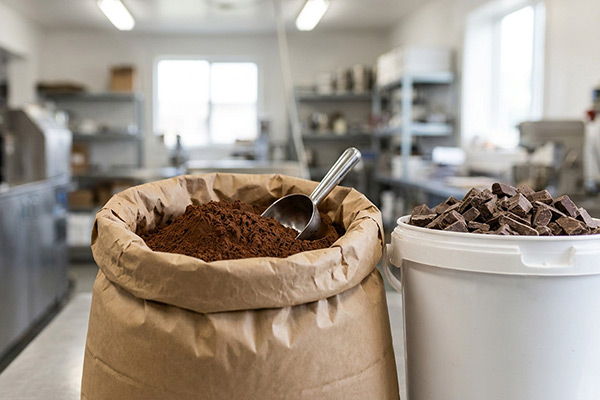
Direct Industrial Supply of Confectionery Ingredients from Iran
Sourcing professionals searching for a dependable confectionery ingredients supplier typically want clear answers about manufacturing capability, bulk supply, and technical coordination. Kam Kaya operates as an Iranian manufacturer and ingredient supplier supporting industrial confectionery production, bulk procurement discussions, and export-oriented supply planning.
The company works with importers, distributors, food manufacturers, and procurement teams that require consistent ingredient performance and reliable communication with the manufacturing source. Instead of navigating multiple intermediaries, international buyers can communicate directly with Kam Kaya to discuss formulations, specifications, packaging formats, and wholesale supply conditions.
With more than fifteen years of experience in industrial chocolate production and confectionery ingredient supply, Kam Kaya supports organizations that require stable sourcing for manufacturing environments. The factory’s production capacity reaches approximately 10 tons per day and about 300 tons per month, allowing companies to evaluate bulk purchasing and repeat supply planning with greater confidence.
Kam Kaya B2B Supply Snapshot
Kam Kaya brings more than fifteen years of experience in industrial confectionery ingredient production, with manufacturing capacity reaching approximately 10 tons per day and about 300 tons per month. Direct communication with the manufacturer supports specification discussions, bulk supply planning, and export coordination. Free samples are available, and sample preparation typically takes about one working day so buyers can evaluate ingredient compatibility before committing to larger orders.
The approximate minimum order quantity is around 100 kilograms depending on product weight, while sample requests are not limited by MOQ. Technical documentation such as certificates of analysis (COA), technical data sheets (TDS), safety documentation, and physicochemical analysis reports can be provided when required. Packaging formats include 3 kg, 4 kg, and 12 kg buckets as well as 12 kg cartons, and export shipments may reach approximately 24 tons using container-based transport.
Who This Wholesale Confectionery Supply Page Is For
This page is designed for professional buyers responsible for industrial or wholesale sourcing decisions. It is not intended for retail purchasing or small-volume orders. Kam Kaya works with organizations including international food ingredient importers, confectionery distributors, industrial bakeries, private-label brands, and food manufacturers that require a dependable wholesale confectionery supplier from Iran.
For these B2B buyers, sourcing rarely involves a single purchase. Instead, procurement typically includes bulk ingredient planning, specification alignment, packaging coordination, and repeat supply discussions between purchasing departments and production teams. Companies evaluating suppliers often need to understand not only ingredient performance but also supply stability, production capacity, and the availability of technical documentation before confirming procurement decisions.
Kam Kaya supports these organizations through structured commercial communication so sourcing discussions can move efficiently from supplier evaluation to quotation review and bulk supply planning.
Kam Kaya as an Ingredient-Focused Confectionery Products Supplier in Iran
As a confectionery products supplier in Iran, Kam Kaya works directly with B2B buyers who need to discuss ingredient behavior before committing to bulk purchases. In this context, the company supports ingredient-focused supply and industrial confectionery production requirements rather than retail sweets distribution.
Companies researching confectionery in Iran often look beyond price comparisons and instead prioritize suppliers capable of supporting technical discussions related to industrial production. For many buyers reviewing Iran confectionery companies, the ability to communicate directly with a manufacturer and review technical documentation becomes an important part of the supplier evaluation process.
In many manufacturing environments, purchasing teams must confirm that ingredients will perform correctly within their own formulations and equipment. Differences in fat composition, moisture levels, and processing temperatures can influence coating behavior, filling texture, and overall production efficiency. Early technical discussions help ensure that sourcing decisions align with real production conditions.
During supplier evaluation, supporting documentation can be provided when required. Available documents may include certificates of analysis (COA), technical data sheets (TDS), safety documentation, and physicochemical analysis reports so internal R&D or quality control teams can review compatibility before scaling procurement.
Product Scope and Industrial Use Cases
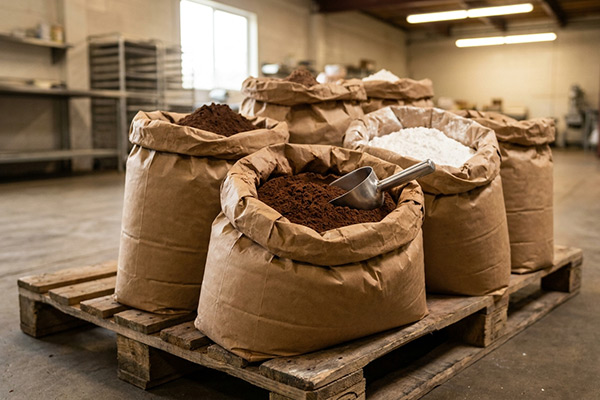
Industrial confectionery ingredients are integrated into production systems where ingredient stability directly affects coating performance, filling behavior, and final product consistency. Within confectionery manufacturing environments, ingredient sourcing commonly involves industrial ingredient categories such as chocolate and coating compounds used in enrobing and coating lines, or confectionery fillings and center formulations designed for depositing or extrusion systems. These examples reflect common ingredient groups used in confectionery manufacturing contexts rather than a fixed retail product catalog.
Additional ingredient groups relevant to confectionery manufacturing often include sweetening and texturizing materials such as glucose syrups, powdered sugars, or similar structural ingredients used to maintain product body and moisture control in biscuit, wafer, or cake production lines. Stabilizers and emulsifiers are also important in maintaining processing stability, helping regulate viscosity, improve pumpability, and ensure smooth meltability during continuous manufacturing. When these components remain consistent from batch-to-batch, production teams can maintain predictable coating behavior, filling performance, and overall manufacturing efficiency.
Technical Sourcing Insight: In many factories, the biggest challenge when evaluating a new ingredient source is not taste or appearance but processing behavior. Two materials with similar specifications on paper may perform differently inside a coating system or melting tank. Viscosity control, melt stability, and thermal behavior often determine whether a production line runs efficiently or requires frequent operational adjustments.
Why International Buyers Source Confectionery Ingredients from Iran
Many international buyers begin their search broadly by researching confectionery in Iran. However, most purchasing teams quickly move beyond general market information and focus instead on identifying a reliable ingredient source capable of supporting structured B2B cooperation.
For export-oriented sourcing decisions, clarity of communication and production stability often matter more than general supplier visibility. Companies typically want to confirm ingredient specifications, packaging options, supply capability, and documentation availability before committing to bulk purchases. Early engagement with a manufacturer helps procurement teams review these details during the sourcing process.
Evaluating Iran Confectionery Companies for Direct B2B Supply
When international buyers evaluate Iran confectionery companies, the process usually focuses on operational and technical considerations rather than marketing claims. Purchasing teams often begin by confirming that a manufacturer can engage directly, provide a clear product scope, and support bulk ingredient supply for industrial production environments.
During supplier evaluation, attention frequently shifts toward technical compatibility. Companies may review parameters such as water activity, particle size control, fat behavior, and overall processing stability to determine whether ingredients from a confectionery manufacturer in Iran will integrate smoothly with existing production equipment such as biscuit lines, wafer lines, or coating systems.
Sample evaluation is often an essential step during this process. Kam Kaya provides samples free of charge, and sample preparation typically takes about one working day. The sample approval process usually involves testing by the buyer’s R&D team, after which the approved formulation can be recorded in a dedicated customer file to support consistency during mass production.
Direct Supply Advantages Over Intermediary Sourcing
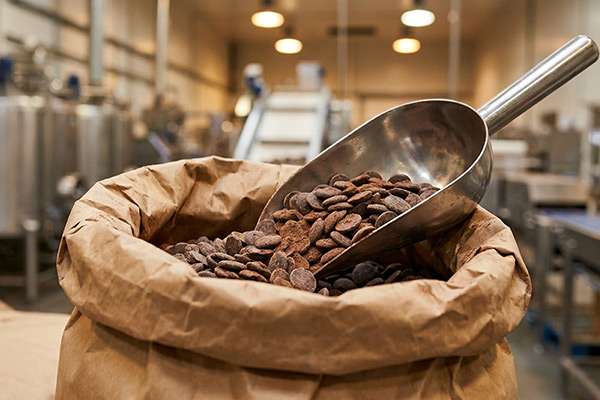
Working directly with a confectionery ingredients supplier simplifies communication during procurement. Instead of relaying technical questions through several intermediary layers, companies can discuss specifications, application requirements, packaging expectations, and formulation behavior directly with the manufacturing source.
In continuous manufacturing environments this clarity becomes especially important. For example, a chocolate coating used on a biscuit production line must maintain pumpability within a melting tank while also delivering stable coating adhesion after cooling. Direct communication with the producer allows production teams to clarify processing behavior, packaging configuration, documentation requirements, and repeat supply planning before confirming tonnage purchases.
Wholesale and Export Supply Process
International sourcing normally follows a structured but flexible workflow when working with a wholesale confectionery supplier from Iran.
Step 1 – Initial Inquiry: The inquiry describes the ingredient category, expected industrial application, and approximate purchasing volume so the supplier can confirm whether the request aligns with available product scope.
Step 2 – Technical Review: Product specifications, processing requirements, and packaging formats are reviewed to determine compatibility with the manufacturing environment.
Step 3 – Sample Evaluation: Samples may be provided for R&D or production testing. Sample preparation typically takes about one working day so ingredient performance can be evaluated before committing to bulk procurement.
Step 4 – Quotation and Commercial Review: Once compatibility is confirmed, quotation discussions normally include formulation details, order volume, packaging configuration, and documentation exchange.
Step 5 – Order Preparation and Export Coordination: After order confirmation, preparation generally takes between one and five working days depending on order volume and formulation requirements. Export shipments can reach volumes of approximately 24 tons and are typically coordinated for container-based transport.
Information Buyers Should Provide Before Requesting a Quote
Providing clear information during the initial inquiry helps accelerate the quotation process. Buyers contacting Kam Kaya typically share the ingredient category they are sourcing, estimated order volume or monthly consumption, the destination market, and preferred packaging format.
When technical alignment matters, including the intended industrial application or specification requirements helps ensure that the quotation discussion reflects production conditions. Kam Kaya’s approximate minimum order quantity is around 100 kilograms depending on product weight, while sample requests are not limited by MOQ, allowing evaluation of compatibility before larger purchasing commitments.
Quality Control, Specifications, and Documentation
For international buyers, risk reduction begins with clarity around specifications. Industrial confectionery ingredients must maintain stable product quality across repeated shipments in order to support continuous manufacturing operations.
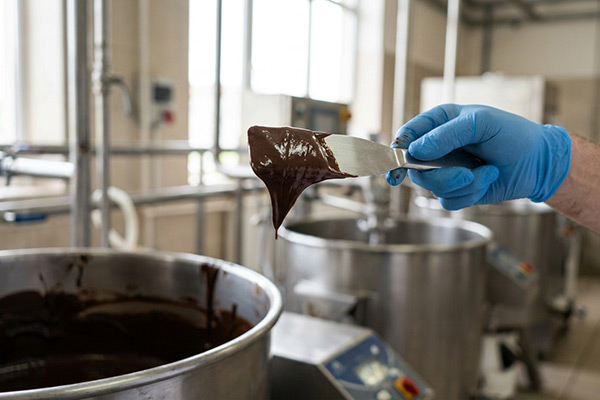
Quality control procedures include laboratory testing and random batch checks to verify uniformity across production runs. Where product-specific weight control applies, tolerance may be maintained within approximately 5 grams, and a final quality inspection is conducted before shipment. Documentation such as certificates of analysis, technical data sheets, safety sheets, and physicochemical analysis reports can be provided when required for internal supplier approval processes.
Available documentation may include National Standard certification, ISO-related certification or documentation, Health Certificate documentation, and relevant local regulatory documentation where applicable.
Manufacturing Capability and B2B Production Support
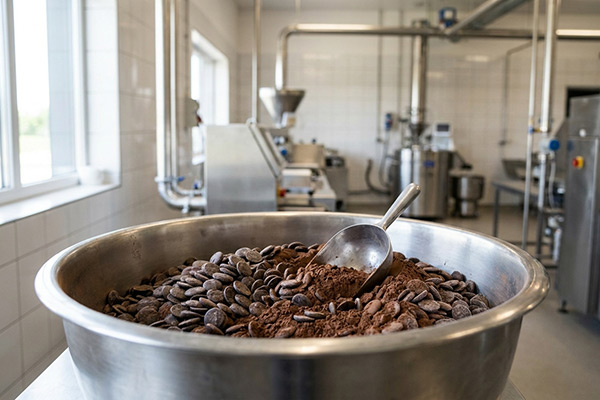
Buyers searching for a confectionery manufacturer in Iran often want to confirm that the supplier understands real production environments rather than simply distributing finished ingredients. Industrial confectionery manufacturing involves careful management of formulation behavior, ingredient rheology, and interaction with processing equipment.
Kam Kaya supports this technical alignment through experience in industrial chocolate and confectionery ingredient production. Reverse engineering and formula development are possible when buyers provide samples from their current production line, allowing formulation adjustments based on processing conditions and destination climate.
Consistency for Repeat and Bulk Orders
For repeat supply planning, consistency becomes one of the most important evaluation factors. Factories operating continuous production lines depend on predictable ingredient behavior, where batch-to-batch consistency, flavor stability, and uniform color help maintain efficient processing and stable final product quality.
Once a formulation is approved by the buyer’s R&D team, the approved formula can be stored in a dedicated customer file so the same formulation can be reproduced for future bulk orders. This approach helps maintain consistency when companies move from trial orders toward repeat supply planning.
Packaging, Specifications, and Custom B2B Requirements
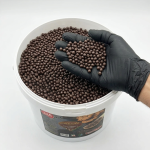
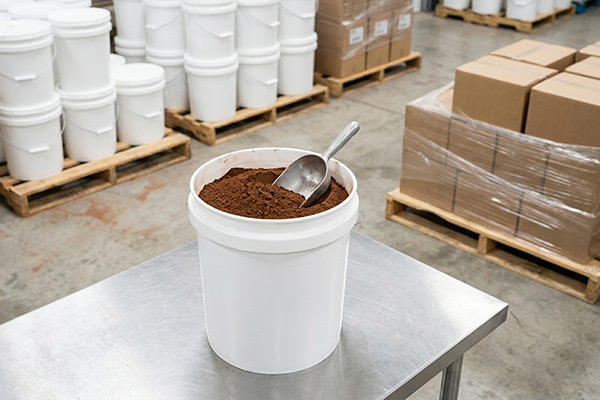
Industrial buyers typically require packaging formats that align with factory logistics, storage conditions, and internal handling systems. Available packaging includes industrial buckets in sizes of 3 kg, 4 kg, and 12 kg as well as 12 kg cartons designed for palletized transport and warehouse storage.
Packaging includes technical labeling such as production date, expiry date, and batch number so incoming materials can be tracked through warehouse and quality control systems. Under recommended storage conditions, product shelf life is approximately 12 months from the production date.
Recommended storage temperature is between 20 and 27 degrees Celsius in a clean, low-humidity environment. Wooden pallets are typically used to maintain appropriate storage conditions.
Export Communication and Shipment Coordination
International ingredient sourcing requires coordination between buyers and manufacturers around shipment planning, packaging preparation, documentation exchange, and scheduling before dispatch.
Kam Kaya coordinates container-based export shipments and supports shipment planning for export orders. Transport conditions are reviewed depending on seasonal temperatures and destination routes to support shipment planning for export destinations.
For carton-packed shipments traveling to destinations with temperatures above 35 degrees Celsius, refrigerated transport may be recommended. During hot seasons, loading and dispatch are typically scheduled during cooler hours to reduce heat exposure and maintain product quality throughout the export process.
Why Choose Kam Kaya as Your Iranian Confectionery Ingredients Supplier
For companies evaluating an Iranian confectionery ingredients supplier, the most important considerations typically include supply reliability, technical transparency, and the ability to support consistent bulk procurement for industrial manufacturing.
Kam Kaya brings approximately fifteen years of experience in industrial confectionery ingredient production and B2B supply cooperation. Production capacity of about 10 tons per day, equivalent to roughly 300 tons per month, allows buyers to plan repeat purchasing with greater confidence when evaluating long-term sourcing options.
The company works with industrial customers such as dairy factories, ice cream manufacturers, cake and cookie producers, sesame paste producers, and other food manufacturers that rely on stable ingredient performance in production environments. Export shipments currently reach several neighboring markets while domestic distribution supports manufacturers across the country.
For companies comparing Iran confectionery companies or searching for a wholesale confectionery supplier from Iran, direct engagement with a confectionery manufacturer in Iran can simplify technical discussions, specification review, and quotation planning before committing to bulk orders.
Organizations seeking a reliable Iranian confectionery ingredients supplier for industrial production are welcome to begin a sourcing discussion with Kam Kaya to evaluate product compatibility, documentation availability, and long-term supply possibilities.
Request a Wholesale Quote from Kam Kaya
To begin a wholesale supply discussion, buyers can contact Kam Kaya by sharing the ingredient or product category required, estimated order volume or monthly demand, destination market, preferred packaging format, and any available technical specifications. This information helps the team review compatibility, confirm logistics, and prepare a relevant, accurate quotation discussion for you.
FAQ for International Buyers
Is Kam Kaya a confectionery ingredients supplier or a trading company?
Kam Kaya operates as a direct confectionery ingredients supplier supporting industrial B2B sourcing. The team facilitates communication regarding ingredient requirements, production applications, technical specifications, packaging considerations, and wholesale coordination, allowing buyers to manage sourcing requirements directly with the manufacturer.
Can international buyers order wholesale confectionery products from Iran?
Yes. International buyers can contact Kam Kaya to discuss wholesale purchasing requirements for confectionery ingredients and related supply categories used in industrial confectionery production. These discussions typically include product scope, intended applications, destination markets, packaging preferences, and export coordination for bulk orders.
What information is needed to request a quotation?
To request a quotation, buyers usually provide the ingredient category they need, estimated purchasing volume, destination country, and preferred packaging format. When available, details about the intended industrial application or technical requirements help ensure that the quotation discussion reflects production needs.
What is the minimum order quantity for wholesale buyers?
The approximate minimum order quantity is around 100 kilograms depending on product weight. However, sample requests are not limited by MOQ. Samples allow buyers to evaluate ingredient compatibility, processing behavior, and formulation performance before committing to larger bulk purchases.
Can Kam Kaya provide product specifications or documentation?
Yes. During supplier evaluation, documentation such as certificates of analysis (COA), technical data sheets (TDS), safety documentation, and physicochemical analysis reports can be provided when required. These materials allow internal quality control or R&D teams to review ingredient specifications before approving bulk procurement.
Does Kam Kaya support long-term B2B supply cooperation?
Yes. Many companies begin with specification discussions or sample evaluation and then move toward repeat supply arrangements once ingredient compatibility and production performance are confirmed. For organizations with predictable demand, periodic supply cooperation can also be discussed when a demand schedule is provided.
 Phone number:
  WhatsApp Response: